Hello, this is Dr. Jay, director of COCO Clinic.
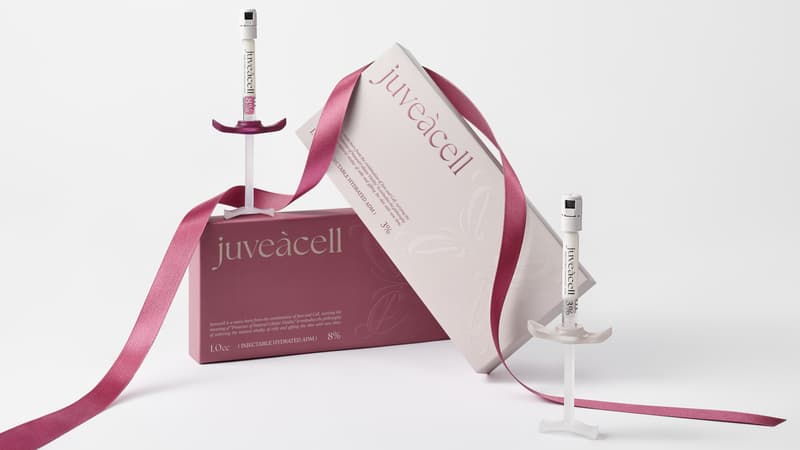
In this post I will explain the ADM (acellular dermal matrix) skin booster — a category rising rapidly of late — and, among them, a product worth watching: Juveacell.
What is ADM?
Briefly, ADM is made by harvesting dermal tissue, removing all cellular components through a decellularization process, and leaving only the extracellular matrix (ECM). This ECM contains the components we generally consider beneficial — collagen, elastin, glycosaminoglycans, growth factors, and more.
When ADM is injected into the skin, this beneficial structural material (ECM) is delivered as-is, helping to improve the skin's health. As an analogy: it is like acquiring a house, keeping the sturdy structure (walls and pillars) while removing all the people (cells), leaving an empty house. New people (your own cells) then move in and live there.
ADM has already been used for decades in plastic and reconstructive surgery. Major clinical applications include use as a tissue-expander/implant cover after breast cancer surgery, and to promote healing of deep wounds such as diabetic foot ulcers. For aesthetic purposes it has been used as an implant cover in rhinoplasty, and in urology for penile augmentation.
Expected effects when ADM is injected into the skin:
- Used as an implant or cover: structural support at the surgical site
- Acts as a scaffold to promote tissue regeneration: fibroblast infiltration, angiogenesis, and induction of collagen formation
- Suppresses inflammation: some studies observed increases in anti-inflammatory cytokines and decreases in inflammatory cytokines
Translated literally, acellular dermal matrix means a dermal matrix from which cells have been removed (acellular = cells removed, dermal = dermis, matrix = matrix).
ADM becomes a dark horse of aesthetic medicine
Whereas it was previously used mainly to promote post-surgical recovery or for reconstruction, more recently ADM has begun to be used for facial anti-aging and aesthetic purposes. However, using it on a surgical site and using it on facial skin are different matters. Facial skin is generally thinner and more sensitive, so for aesthetic facial use the product's quality and safety must be even higher.
In other words, the ADM products once used rather roughly needed to evolve into more refined products. To put the conclusion first: the recently launched Juveacell is a highly refined product that meets these needs well.
Juveacell boasts strong product quality based on technology that differentiates it among ADM products, and its safety has been validated through Korean MFDS certification and internationally recognized research. Through supercritical CO2 (scCO2) technology, cells are cleanly removed — minimizing the possibility of an immune reaction — while the ECM structure is well preserved, yielding a high-quality ADM product. This supercritical CO2 technology is a key feature, which I will cover in more detail in a future post.
So how is it best used for aesthetic purposes? Many approaches are possible, but the most broadly applicable method is to inject small amounts evenly into the skin, like a conventional skin booster.
When used this way, what differentiates it from conventional skin boosters is that the effect appears quickly. With conventional skin boosters, visible effects typically took about 2–4 weeks: a substance that promotes skin regeneration was injected, and there was a time lag before the skin actually regenerated.
ADM, by contrast, directly supplies an ECM that already contains collagen, elastin, and so on — so visible effects often appear within a few days, and a relatively definite effect can be expected. Where conventional products are substances that promote collagen and elastin production, ADM directly delivers the end product: collagen and elastin.
Another recommended approach is to treat areas that were difficult to improve with conventional methods, such as under-eye hollows and neck lines. Under-eye hollows, for instance, are a high-difficulty and often-avoided area for filler — relatively risky and easy to make look unnatural. With ADM, however, we have observed relatively natural improvement. This also differentiates it from existing collagen boosters like Juvelook: collagen boosters generally require 2–3 repeat sessions, whereas ADM can show some effect even with a single session.
While ADM has only recently begun to be used on the face, ADM products as a whole carry a validated history of several decades and offer several advantages over existing products — so they hold great potential and are likely to be used more widely.
I will cover other specific applications of ADM and the supercritical CO2 technology in a follow-up post. Thank you for reading this long piece.
Summary
- ADM (Acellular Dermal Matrix) removes cells from donated dermal tissue and, through processing, leaves ECM components such as collagen and elastin to be injected.
- Previously used widely in plastic and reconstructive surgery, it has recently begun to be used for facial aesthetic purposes.
- The key is to remove cells safely and cleanly to minimize side effects such as immune reactions, while preserving the ECM structure to make a high-quality product.
- Compared with conventional skin boosters, collagen boosters, and fillers, it has distinct advantages, so its potential is high and it is likely to be performed more widely.
Keywords
Location
Consultation
Have questions?
Find the treatment and settings that fit your skin — book a consultation at COCO Clinic.